
Tiny Hands, Big Stories: The Power of Preschool Scribbles
When adults think of stories they often think of the books they read as children or the Disney movies their kids are obsessed with. You imagine a princess locked away in a castle, a little boy on the hunt for an adventure, or tales of talking animals. In nearly every case, these stories have words and detailed illustrations to grab attention and describe the plot.
It’s not often that you would hear an adult say that their toddler or even kindergartener has written a story. Perhaps because they cannot write, or maybe because they don’t consider those funny little tales they tell full-on stories. When in truth, young children are some of the most creative and imaginative storytellers.
Often, these stories may be told through their somewhat understandable toddler talk. We get bits and pieces of it but not the whole plot. However, most do not realize that those seemingly random scribbles that your 3-year-old started drawing are actually stories too.
What is purposeful scribbling?
There comes a time, around the age of 2 or 3 when children go from completely random scribbles to more purposeful scribbling. You may notice that rather than random dots and dashes, they are scribbling circles, beginning to draw shapes, and maybe even using multiple colors. This is a sign that your child is beginning to tell you something with their art. Soon, they will be drawing floating objects, tadpole people (a simple drawing of a person often without a body or limbs), and truly using their artwork to tell stories.
Preschoolers can’t yet write full sentences and create books on their own, but they do have wild imaginations filled to the brim with ideas and stories. They might begin drawing children playing together, dragons flying in the air, or pictures of things they see around them. And even if you can’t quite tell that that’s what it is, take this as a sign that your child has stories to tell.
What should I do once I notice this change?
First, recognize that your child might have something to share and ask about their pictures. I don’t like using the phrase, “What is that?” and don’t typically try to guess what they drew. This can lead to some sad feelings when they think their picture of the dog is perfectly clear but you guessed it was a person. Instead, I would use phrases like, “Tell me more about your picture!” or “Why did you choose those colors?”. Show interest in their artwork. That alone will go a long way.
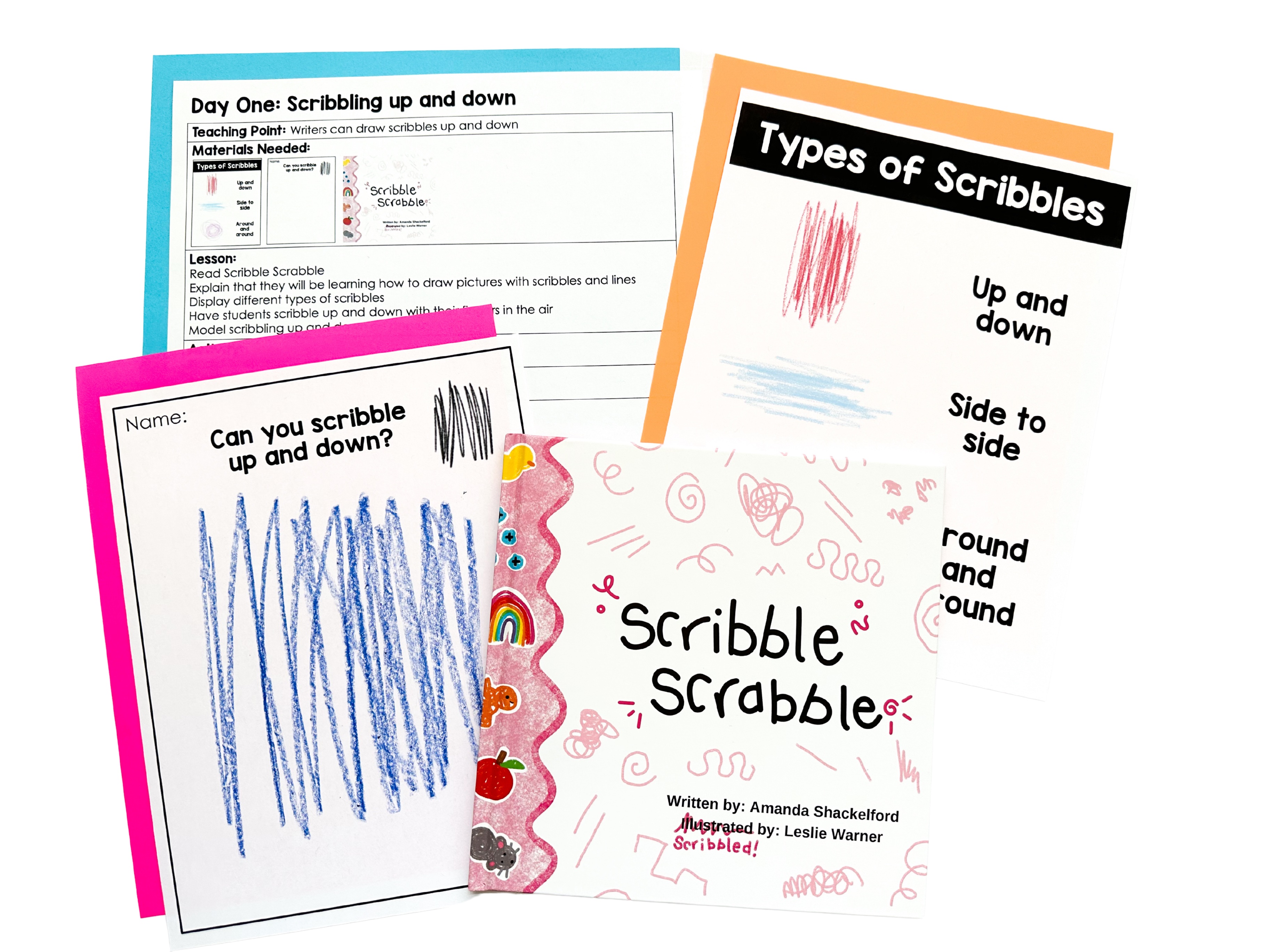
Scribble Scrabble is a short children’s book all about how scribbles can be made into art! It encourages creativity and imagination, and shows children that illustrations do not have to be perfect! I highly recommend grabbing it and reading it with your child or class!

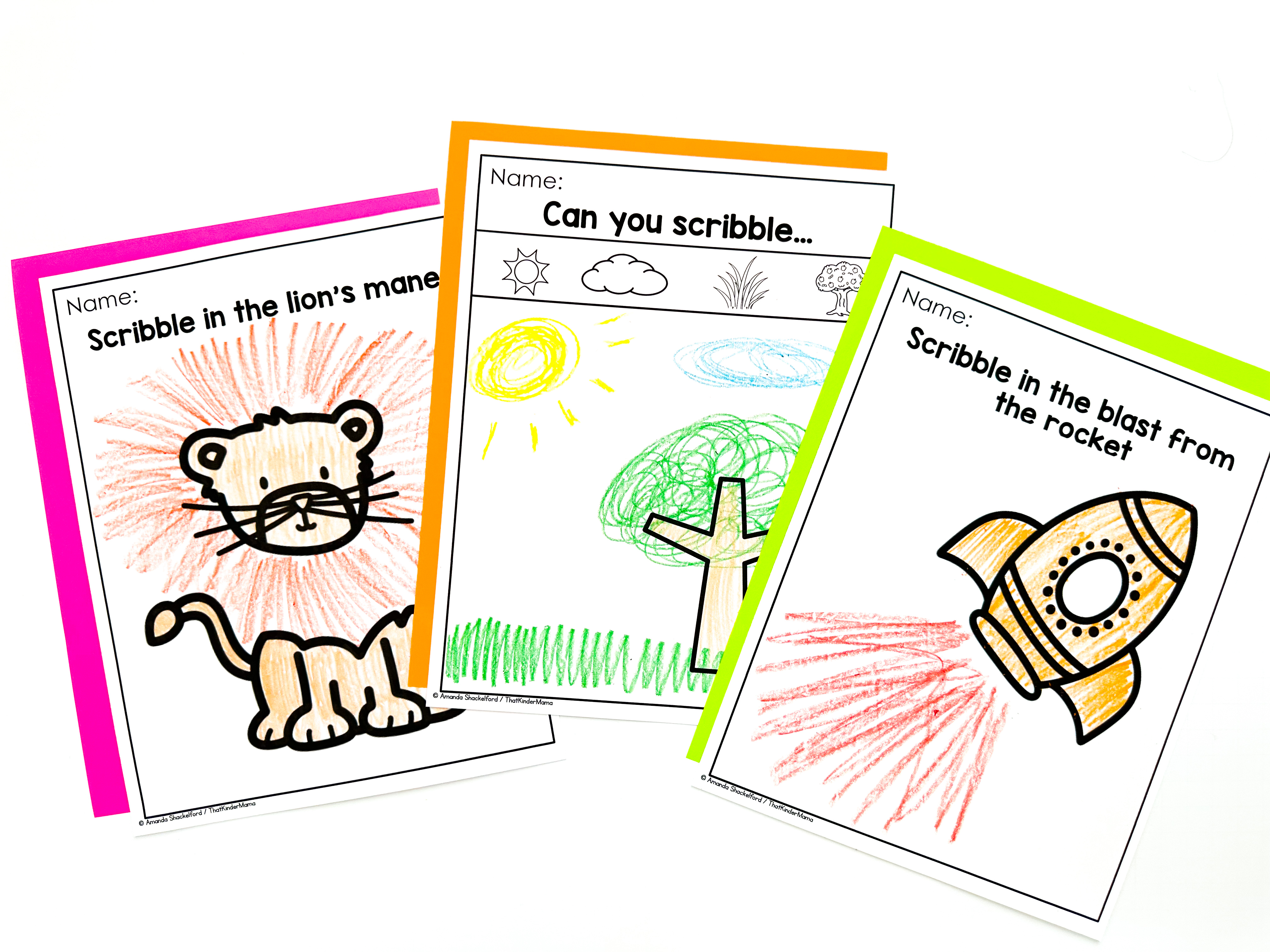
As you continue to see this kind of coloring, encourage them and model how you might use scribbles to draw things like clouds, flowers, or other objects. Show them that scribbles can go in different directions and that you can make shapes out of them!
If you want to go even further with this encouragement and help your child or student continue to grow into a little artist and author, I highly suggest using this resource. My Preschool Drawing Unit is all about using scribbles to make art and developing those important fine motor skills. It is developmentally appropriate for toddlers and written so that both teachers and parents can easily teach it!
Get your own copy of Amanda's book:
Hardback: Scribble Scrabble HERE!
Paperback: Scribble, Scrabble HERE!
Learn more
Here are a few handpicked articles to inspire your teaching journey

Scribble Scrabble is a joyful, rhyming picture book that celebrates creativity, imagination, and the beauty of every scribble. Designed for...

This 4-week Comparing Numbers Unit for Kindergarten helps students confidently compare numbers 0–20 using hands-on tools and engaging activities. Students...

This 4-week Kindergarten Measuring & Graphing Unit helps students build a strong foundation in measurement and early data skills. Through...

This 2-week Kindergarten 3D Shapes Unit brings geometry to life! Through hands-on exploration, building, and sorting, students learn to identify,...

This 4-week Addition to 10 Unit helps Kindergarteners build strong number sense while having fun with hands-on math. Students explore...

This 4-week Number Sense Unit for Kindergarten helps students build confidence and fluency with numbers 0–20 through hands-on, engaging activities....

This 4-week 2D Shape Math Unit helps kindergarten students build a strong foundation in geometry through hands-on, play-based learning. Students...

Give your kindergarten students the strong start they need with this Print Concepts Reading Unit! Students learn how books work,...